
Homeopathy is often considered a natural option for hyperpigmentation and dark spots. However, current scientific evidence does not reliably show that homeopathy can treat hyperpigmentation or any specific health condition.
For healthier-looking skin, an evidence-based approach focuses on identifying the cause of pigmentation, daily sun protection, gentle skincare, and appropriate treatment when needed.
Key Takeaways
- Hyperpigmentation can develop due to sun exposure, acne, inflammation, hormones, or other skin conditions.
- There is currently no reliable scientific evidence that homeopathy treats hyperpigmentation.
- Sunscreen is one of the most important steps for preventing dark spots from becoming darker.
- Gentle skincare can help reduce irritation that may worsen pigmentation.
- Persistent or changing dark spots should be evaluated by a dermatologist.
What Is Hyperpigmentation?
Hyperpigmentation is a common skin concern where certain areas become darker than the surrounding skin. It happens when the skin produces more melanin, the pigment responsible for skin colour.
Dark spots can appear after acne, skin inflammation, excessive sun exposure, hormonal changes, or certain skin conditions. Melasma is another common form of pigmentation that can cause darker patches, especially on the face.
Because different types of pigmentation have different causes, the right approach depends on what is causing the discoloration.
Can Homeopathy Treat Hyperpigmentation?
Homeopathy is based on a system of highly diluted substances and individualized remedies. Some people use homeopathic products as part of a natural skincare or wellness routine.
However, it is important to separate traditional use from scientific evidence. According to the National Center for Complementary and Integrative Health (NCCIH), there is little evidence supporting homeopathy as an effective treatment for any specific health condition.
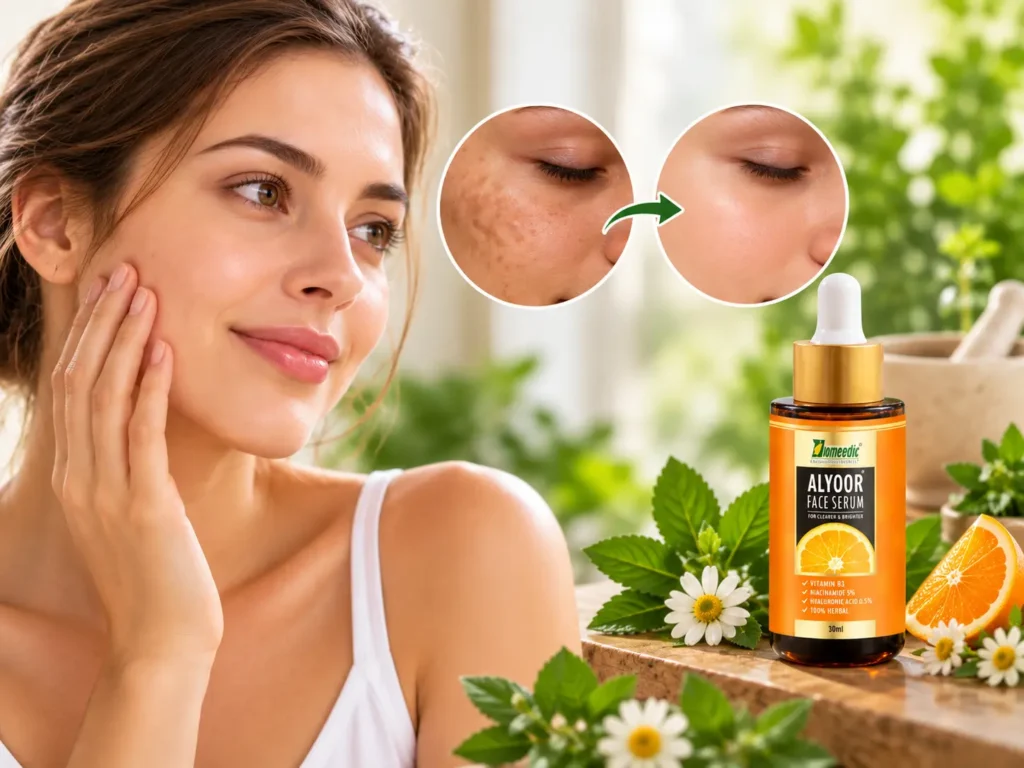
Mayweed Remedies also offers the ALYOOR Face Serum with Vitamin C, formulated with Vitamin C, niacinamide, hyaluronic acid, and Thuja extract. Niacinamide is included in the formulation for concerns such as dark spots and pigmentation.
What Causes Dark Spots?
Understanding the cause is an important part of managing pigmentation. Common triggers include:
- Sun exposure: UV and visible light can increase pigmentation and make existing dark spots more noticeable.
- Acne and inflammation: Spots left after pimples or skin irritation can result in post-inflammatory hyperpigmentation.
- Hormonal changes: Conditions such as melasma may be associated with pregnancy, hormonal medications, and other triggers.
- Skin irritation: Harsh products or treatments that cause burning or irritation can make pigmentation worse.
- Underlying skin conditions: Some pigmentation changes may need professional assessment.
Identifying the underlying cause can make it easier to choose an appropriate skincare approach.
Evidence-Based Natural Ways to Support Healthier Skin
If you prefer a gentle and natural approach to skincare, focus on habits that support the skin rather than relying on unproven claims.
1. Use Sunscreen Every Day
Sun protection is one of the most important steps when dealing with dark spots. Use a broad-spectrum sunscreen with SPF 30 or higher.
For people concerned about pigmentation, tinted sunscreen containing iron oxide may also help protect against visible light.
Reapply sunscreen regularly, especially after swimming, sweating, or spending extended periods outdoors.
2. Keep Your Skincare Routine Gentle
Avoid skincare products that consistently burn or sting. Skin irritation can contribute to worsening dark spots, particularly in people who are prone to pigmentation.
A simple routine can include:
- Gentle cleanser
- Moisturiser suitable for your skin type
- Broad-spectrum sunscreen during the day
Keeping the routine simple can also make it easier to identify products that may be irritating your skin.
3. Avoid Unverified DIY Remedies
Natural does not automatically mean safe or effective. Applying concentrated kitchen ingredients, harsh acids, or unsuitable products to dark spots can irritate the skin.
Instead, choose products with clearly listed ingredients and follow appropriate usage instructions.
Can Dark Spots Go Away Naturally?
Some pigmentation may gradually fade when the trigger is removed, and the skin is protected from further irritation and sunlight. However, the time required can vary depending on the depth and cause of pigmentation.
Some dark spots may fade within months, while deeper pigmentation can take considerably longer. Consistent sun protection can help prevent further darkening.
Patience is important because trying too many products at once can irritate the skin and potentially make pigmentation more noticeable.
When Should You See a Dermatologist?
Consider professional evaluation if:
- A dark spot is new or changing
- Pigmentation keeps spreading
- The area becomes painful, itchy, or irritated
- Dark spots do not improve with basic skincare
- You are unsure whether the pigmentation is melasma, acne marks, or another condition
A dermatologist can identify the likely cause and discuss appropriate treatment options. Depending on the condition, they may recommend ingredients such as azelaic acid, kojic acid, vitamin C, or prescription treatments.
How Mayweed Remedies Can Support Your Skincare Journey
At Mayweed Remedies, the focus is on helping people make informed choices about natural and complementary wellness approaches.
When dealing with hyperpigmentation, it is important to combine any complementary approach with evidence-based skincare habits such as sun protection and gentle skincare.
Natural skincare should be approached with realistic expectations rather than promises of guaranteed results.
Frequently Asked Questions
What is the most important natural step for dark spots?
Daily sun protection is one of the most important steps. Using broad-spectrum SPF 30 or higher can help prevent existing pigmentation from becoming darker and reduce additional sun-related pigmentation.
Can homeopathy and regular skincare be used together?
People may choose complementary approaches alongside skincare, but homeopathy should not replace appropriate medical evaluation or proven treatment. If you have concerns about a product or treatment, discuss it with a qualified healthcare professional.
How long do dark spots take to fade?
It depends on the cause and depth of pigmentation. Some spots gradually fade, while deeper pigmentation can take much longer. Consistent sun protection can help prevent further darkening.
Should I see a dermatologist for hyperpigmentation?
Yes, particularly when pigmentation is persistent, worsening, changing, or difficult to identify. A dermatologist can help determine the cause and recommend suitable treatment.
Final Thoughts
Homeopathy for hyperpigmentation is an area where expectations should be guided by evidence. Current research does not provide reliable evidence that homeopathy treats dark spots.
A practical approach is to identify the cause of pigmentation, protect your skin from the sun, use gentle skincare, and seek professional advice when necessary.
For those interested in complementary wellness, Mayweed Remedies can be considered as part of an informed and responsible approach to natural health.